
The Arctic is changing rapidly, and understanding these changes requires researchers to collect reliable data in some of the most challenging environments on Earth. During the Arctic Ocean 2050 (Polhavet 2050) research cruise, which reached the North Pole this summer, FZ Solutions’ uncrewed surface vehicle (USV) Pamela took on a new role as “Polar Pamela.”
Operated by researcher Natalie Summers, Pamela was used to measure light conditions in the Arctic Ocean, helping investigate how changing sea ice conditions influence light penetration in the water column and, in turn, the algae that form a vital part of the Arctic ecosystem. Equipped with RAMSES radiometers and real-time data transmission, Pamela brought flexible, accessible measurements to an environment where every fieldwork opportunity counts.
Understanding Light in a Changing Arctic
Sea ice plays a crucial role in controlling how much sunlight reaches the ocean below. As the Arctic warms and sea ice conditions change, the amount and distribution of light penetrating the water can change too. These shifts have important implications for Arctic algae, which depend on light for photosynthesis and underpin much of the marine food web. By measuring light conditions in the Arctic Ocean, Natalie Summers’ research contributes to a better understanding of how changes in sea ice may affect the organisms and ecosystems beneath it. Reliable measurements of underwater light are therefore an important piece of the puzzle when investigating the future of the Arctic. In addition to measuring light, physical samples of organisms in the water give important insight into the ecosystem of primary producers in the Arctic.
Taking Measurements Where Traditional Vessels Cannot
One of the challenges of Arctic fieldwork is reaching the precise locations where measurements are needed. Sea ice leads — narrow openings or fractures in the ice — provide access to the ocean but can be difficult to work in using conventional research vessels. Pamela’s compact design and manoeuvrability allow it to operate in shallow and restricted waters where larger platforms may struggle to collect measurements. This flexibility makes it possible to bring scientific instruments closer to the environments researchers want to study, opening up additional opportunities for data collection in complex sea ice conditions.
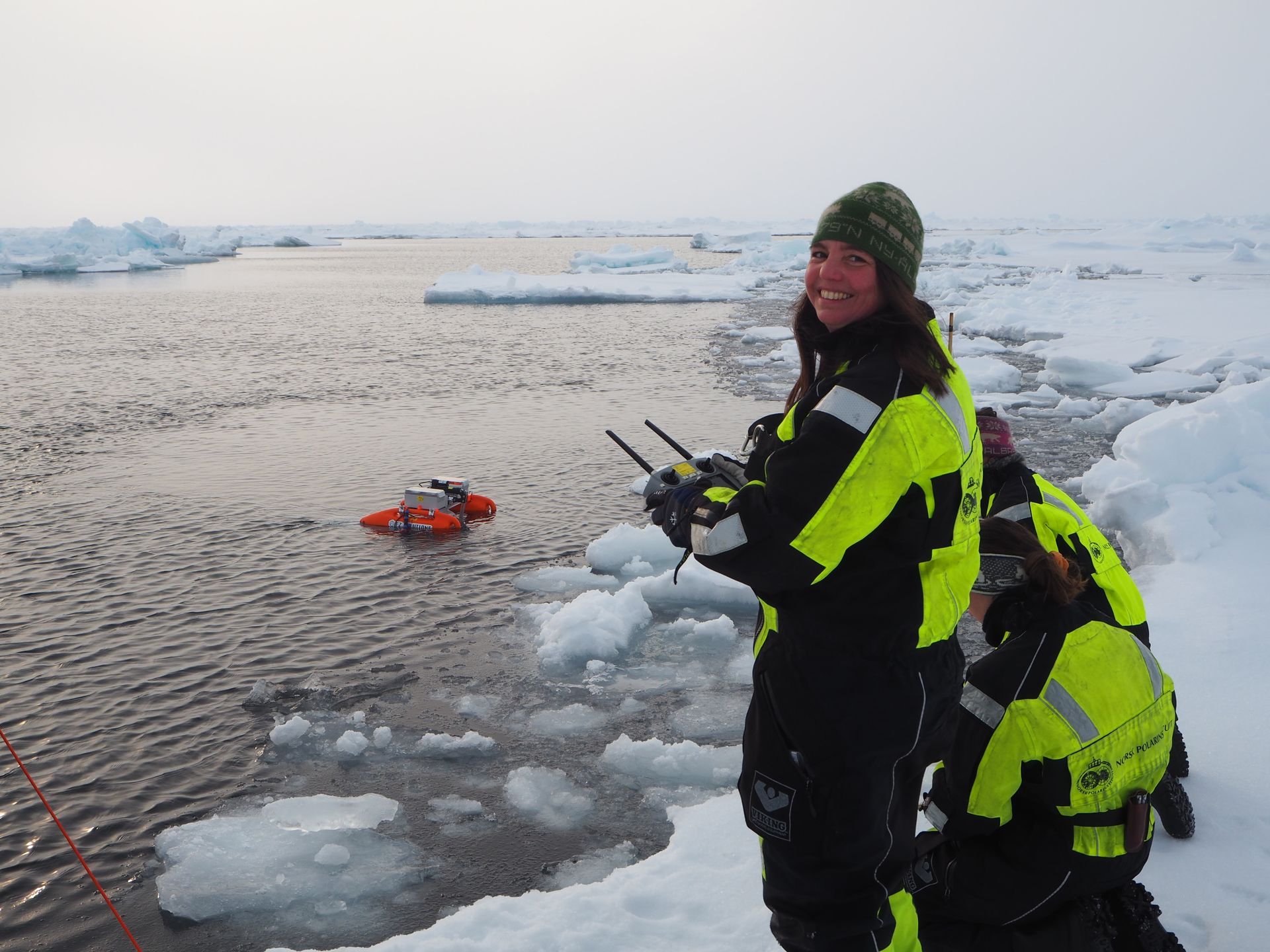
Researcher Natalie Summers operating USV Pamela in a sea ice lead for collecting phytoplankton samples. Photo: Ivan Cautain
Measuring Light with RAMSES Radiometers
For the Polhavet 2050 expedition, Pamela carried RAMSES radiometers from TriOS to measure radiance and irradiance. These complementary measurements help researchers characterise the light field and investigate how light interacts with the ocean and the conditions above it. Integrating scientific instruments onto a USV provides a flexible platform for collecting measurements in the field, while allowing researchers to focus on the scientific questions rather than the practical limitations of deploying equipment from a larger vessel. Pamela’s modular payload system was made with this in mind, so both specialized sensors and standard sensors like temperature and salinity can be easily deployed.
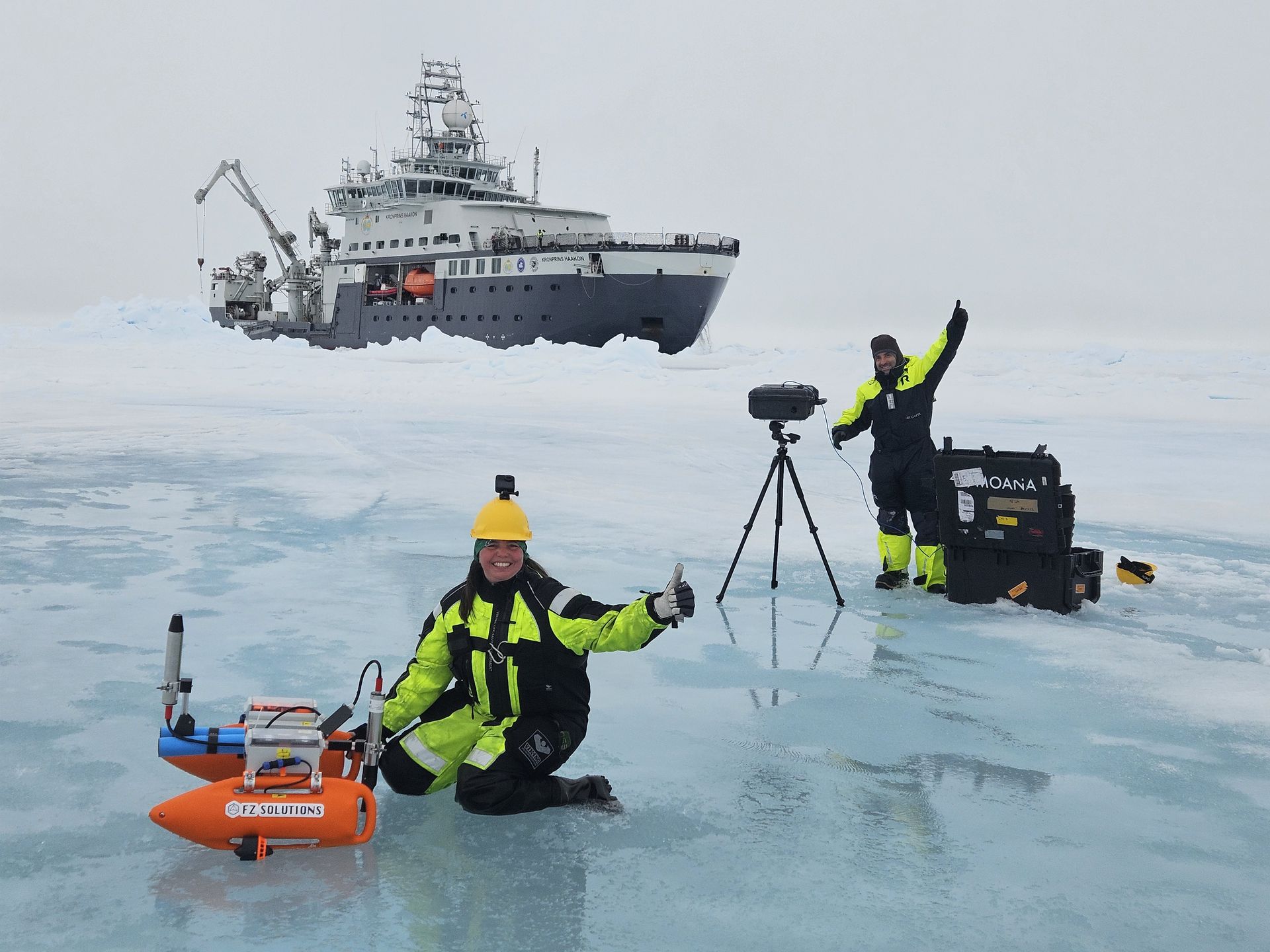
Natalie Summers preparing to deploy USV Pamela on the Arctic Ocean 2050 research cruise. Photo: Natalie Summers.
Real-Time Data for Better Decisions in the Field
Deploying instruments is only part of the job; knowing that the measurements are working as intended is just as important. Pamela transmits sensor data to its remote controller in real time, allowing researchers to monitor measurements while the USV is operating. This immediate feedback helps them check that instruments are functioning correctly and that useful data is being collected before moving on to the next sampling location.
As researcher Natalie Summers explains:
“I am most impressed with how fast I was able to learn to use it and feel comfortable driving her around. Additionally, being able to retrieve the data so easily via Wi-Fi or phone data is a big advantage.”
For researchers working in remote environments, ease of operation and accessible data are more than conveniences. Expeditions require significant investments of time, planning and resources, and returning home only to discover that a sensor was not working correctly or that data was not saved properly can mean losing a valuable opportunity that may be impossible to repeat. Real-time monitoring and straightforward data access help researchers identify problems early and make the most of their time in the field.
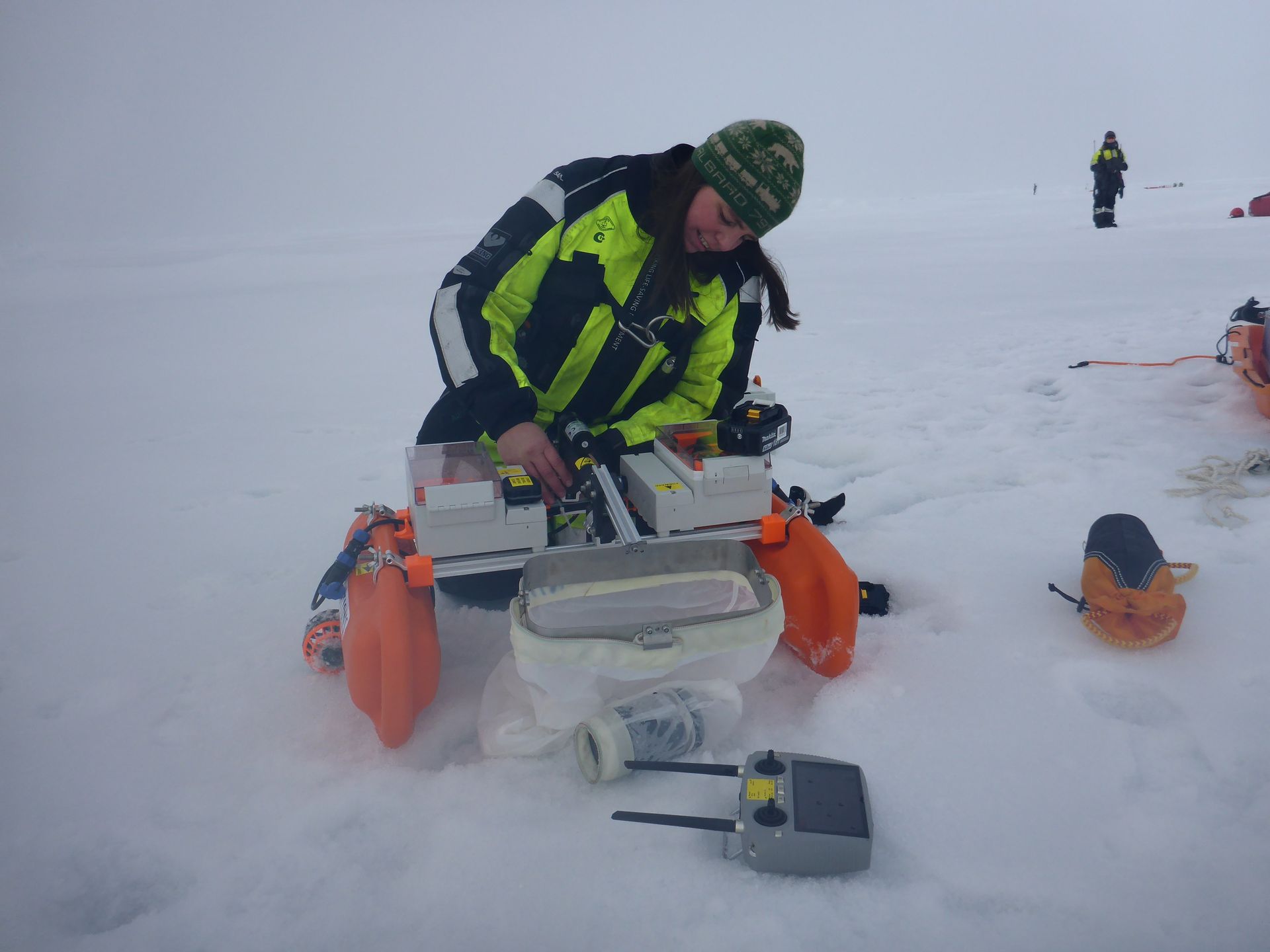
Researcher Natalie Summers assembling USV Pamela on the Polhavet 2020 arctic research cruise. Photo: Morven Muilwijk
Making Every Arctic Fieldwork Opportunity Count
Research expeditions to the central Arctic require enormous investments of time, planning and resources. When a team travels to one of the most remote places on Earth, the opportunity to collect measurements is precious. By combining flexible deployment, scientific sensor integration and real-time monitoring, Pamela helps researchers make better use of the time and infrastructure available to them. The Polhavet 2050 expedition demonstrates how compact uncrewed
platforms can support specialised scientific work in demanding environments, helping researchers access challenging locations and assess their data as they collect it. For FZ Solutions, Polar Pamela is an example of our mission in practice: developing sophisticated but simple-to-use tools that make environmental monitoring more accessible.
Read more about Natalie's fieldwork and the Arctic Ocean 2050 // Polhavet 2020 project here.